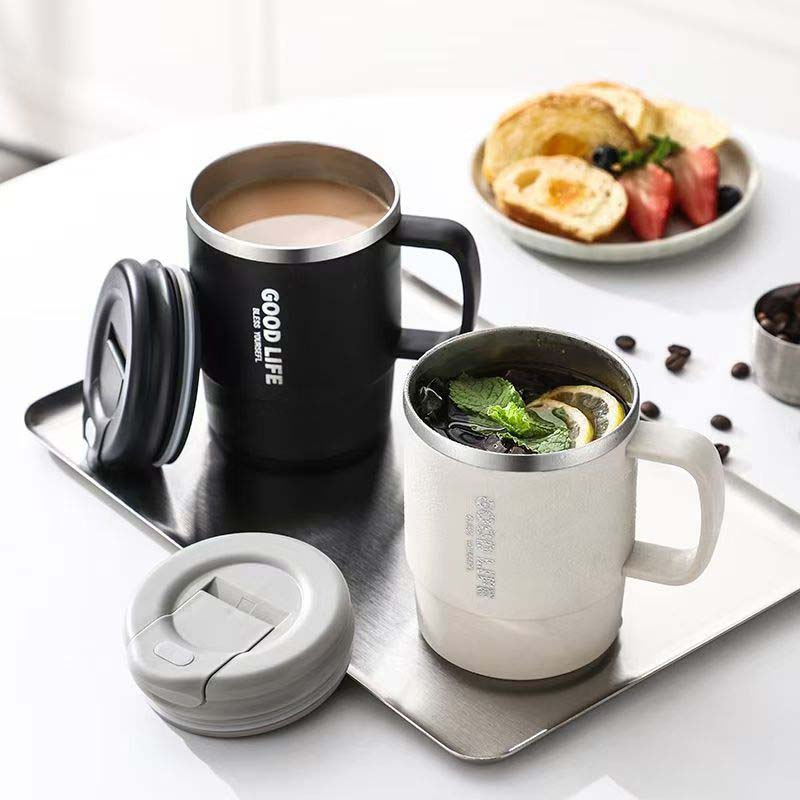
As we approach 2026, the drinkware market is refining its focus. While vacuum-insulated bottles remain popular for travel, a new hybrid contender has secured its place as the “everyday desktop essential”: the composite water cup.
Featuring a stainless steel inner liner wrapped in a durable plastic exterior, this design solves the oldest problem in drinkware—how to balance safety, aesthetics, and handling comfort. For B2B wholesalers, understanding the engineering behind these “hybrid cups” is key to capitalizing on the next wave of corporate and retail demand.
1. The Engineering Advantage: “Cool-Touch” Technology
The defining feature of a plastic-shell water cup with a steel liner is its thermal handling properties. Unlike single-wall stainless steel cups, which conduct heat rapidly to the user’s hand, the plastic exterior acts as a thermal barrier.
- Heat Safety: When filled with hot coffee or tea, the stainless steel liner contains the heat, while the plastic shell remains comfortable to hold. This eliminates the need for cardboard sleeves or silicone grips.
- Condensation Control: For iced beverages, the air gap or physical separation between the steel liner and plastic shell reduces “sweating” on the outside, protecting office desks and paperwork from water rings.
2. Best of Both Worlds: Hygiene Meets Aesthetics
In the 2026 market, consumers refuse to compromise on health or style. The hybrid water cup perfectly bridges this gap.
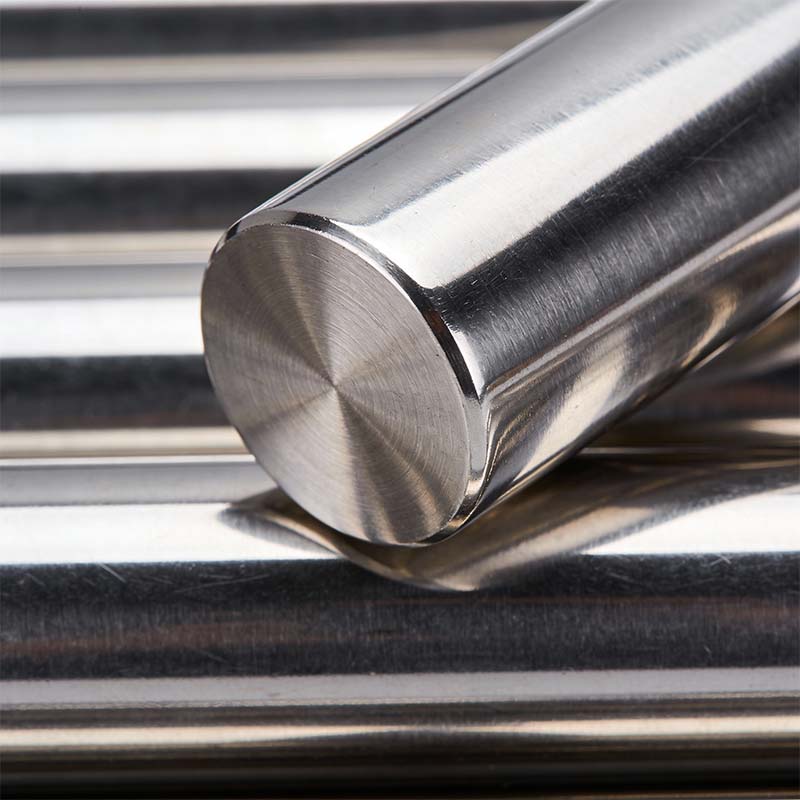
Interior: The Safety of Stainless Steel
The inner vessel is typically crafted from food-grade 304 stainless steel. This is non-negotiable for modern health-conscious consumers because:
- Odor Resistance: Steel does not retain flavors. A user can switch from a latte to lemon water without a lingering aftertaste.
- Chemical Safety: Hot liquids never touch plastic. The steel barrier ensures that no BPA or polymers leach into the beverage, satisfying the highest food safety standards.
Exterior: The Versatility of Plastic
While steel is hygienic, it is difficult to color/print on cheaply. The plastic outer shell offers wholesalers unlimited design potential:
- Vibrant Customization: Plastic allows for pantone-matched colors, matte finishes, and complex molding textures that are impossible or too costly to achieve with metal alone.
- Durability: The plastic shell absorbs impact, protecting the inner steel liner from denting if dropped—a common issue with full-metal cups.
3. The “Lightweight” Ergonomic Shift
Heavy, vacuum-sealed thermoses are overkill for a 30-minute lunch break or a desk job. The hybrid water cup occupies the “Goldilocks zone” of weight and insulation.
It is significantly lighter than a solid ceramic mug (which is prone to shattering) and less bulky than a triple-layer vacuum flask. This makes it the ideal “office-to-home” water cup, easily carried in a tote bag or hand without fatigue. For the B2B sector, this lightweight nature also translates to lower shipping costs per unit compared to heavy ceramic or glass inventory.
4. Sustainability Through Longevity
Critics might point to the use of plastic, but from a lifecycle perspective, the stainless steel lined water cup is a champion of longevity.
Because the steel liner prevents the interior staining and cracking that plagues 100% plastic cups, these hybrid cups have a much longer usable life. They replace thousands of disposable paper cups in the corporate environment. Furthermore, because the outer plastic is not in contact with food, it does not degrade from acidity or heat, ensuring the cup looks new for years.